Illustration for Lila and the Sparrow's Light

Lila and the Sparrow's Light

By Storytime TeamCreated 1 month ago

An old street lantern named Lila and a little sparrow named Pip form a quiet friendship that helps their small town remember the value of small lights and small acts. When the town plans to replace Lila, the pair—and their neighbors—learn how friendship adapts and keeps its glow through change.

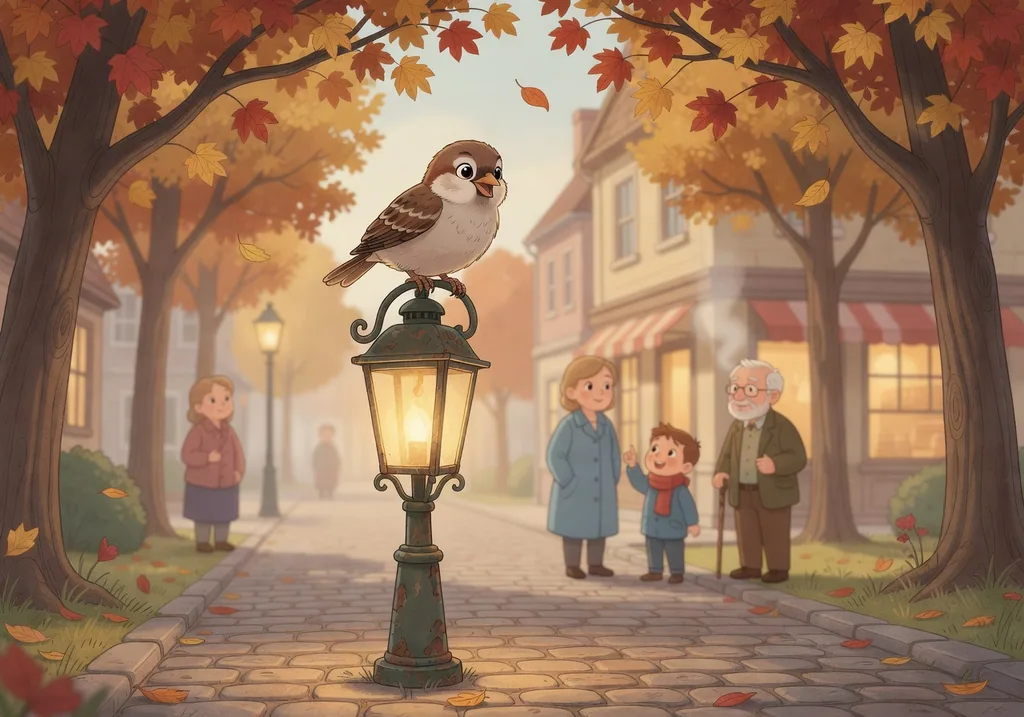
There was a lane in the town of Willow Bend where maples arched overhead and the air always seemed to hold a hint of cinnamon from the bakery at the corner. At the heart of that lane stood an old lantern. People called her Lila.

Lila had been mounted on the same iron post for longer than anyone could remember. Her glass was a little wavy from years of heat and rain, and her brass was speckled with tiny stars of rust. When evening fell, she threw a soft, warm circle of light onto the cobbles below. The light was not very bright, but it was steady and kind, like a friend who always notices when you’ve had a long day.

One autumn evening, a sparrow with a small patch of mischief in his eyes landed on Lila's curved arm. His feathers were the color of toasted oats, and his name was Pip.

Pip liked to visit the lane because Lila's light made it safe for him to peck for crumbs. But he stayed for the stories she told. Lila had watched deliveries arrive, weddings pass by in quiet flurries of laughter, late-night bakers carry boxes of warm buns, and old Mr. Rowan—who still lit the lanterns by hand—humming as he swung along the street.

"Tell me about the wedding again," Pip chirped, fluffing his feathers.

Lila hummed. "They danced in the rain, and everyone slipped on the cobbles with such good cheer that the town has not forgotten how to laugh at itself since."

As the seasons turned, the two settled into a gentle routine. When the bakery's oven sighed, Lila would glow an extra fingertip of warmth; when Pip found a ribbon or a shiny button, he would tuck it into the notch at Lila's base like a little present. They listened to the soft music of the town: the oak leaves on the sidewalk, the distant hum of the river, the boots of late workers. Friendship, Lila learned, could be as simple as being there.
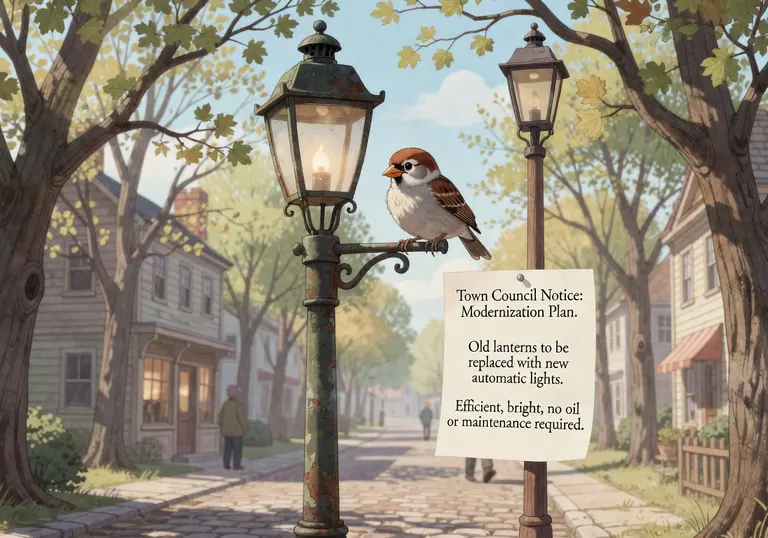
Illustration for Lila and the Sparrow's Light scene 1

One spring, a notice appeared on the lamppost across the lane. The town council had decided to modernize. It was a practical notice, printed on plain paper: old lanterns would be replaced with bright, automatic lights. The new ones promised to light the whole lane without the need for oil, without maintenance. They promised efficiency.

Pip landed on Lila and peered at the notice with his small, earnest eyes.

"So many new things are good things," he said. "They are brighter, cleaner, and they never leak oil."

Lila's glass shivered a little. "I know. I have been useful, Pip. I have kept people from tripping on the cobbles and warmed late bakers' gloved hands. But a part of me worries—what if usefulness is all that matters now?"

That night, Lila burned low. She had been trimmed and tended for years, but even with Mr. Rowan's careful hands, some of the old soot had settled into her corners. Pip stayed close and sang a loop of hopeful chirps while Lila thought of the many evenings she had been a quiet place for secrets and teacups to cool. She thought of how people paused beneath her glow, thinking, perhaps, of someone they loved.

When Mr. Rowan came by the next morning, his steps slowed at the lamppost. He touched Lila's base with fingers that smelled faintly of oil and lavender. "They'll take you down, old friend," he murmured. "They'll say you're no longer needed."

Pip fluttered to Mr. Rowan's shoulder. "Is there no space for old things that still care?" he asked.
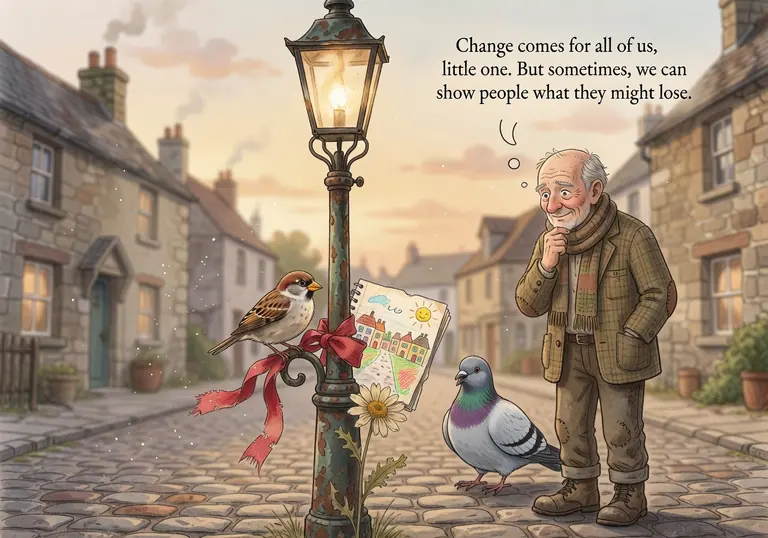
Illustration for Lila and the Sparrow's Light scene 2

Mr. Rowan sighed, a gentle sound. "Change comes for all of us, little one. But sometimes, we can show people what they might lose."

So Pip did what sparrows do best: he gathered. He brought ribbon thrown from stringed packages, a torn page with a child's doodle of the lane, and a dried daisy saved from the summer market. He placed each small treasure in the crook where Lila's base met the post.

He also told the pigeons, and the cat who liked to nap on the bakery window sill, and the foxglove plants that nodded near the fence. The creatures of Willow Bend had no council to speak at meetings, but their actions had a language of their own.

On the morning the new lights were to be installed, townsfolk gathered. Some were curious about the bright, efficient lamps; others remembered evenings lit by the old glow and felt a soft tug in their chests. Mr. Rowan stood with Lila's oil can at his side, and Pip perched on his hat like a feathered badge of honor.

Children who came with their grandparents—no matter how many new lights the council promised—stood on tiptoe to see. The baker brought out a tray of small breads. A young woman placed a note at Lila's post, written in her careful script: "This light guided me home the night I ran away for the first time and came back to learn that home was here all along." Another neighbor left a tiny knitted heart.

The electrician, a bright-eyed woman named Amina, climbed the ladder with a toolbox. She had the new lamp's fixtures in her bag, but as she reached for the bolt to remove Lila, she paused. She looked at the little treasures, at Mr. Rowan's hands, at Pip's earnest tilt of his head.

"Do we have to take her down?" she asked softly.
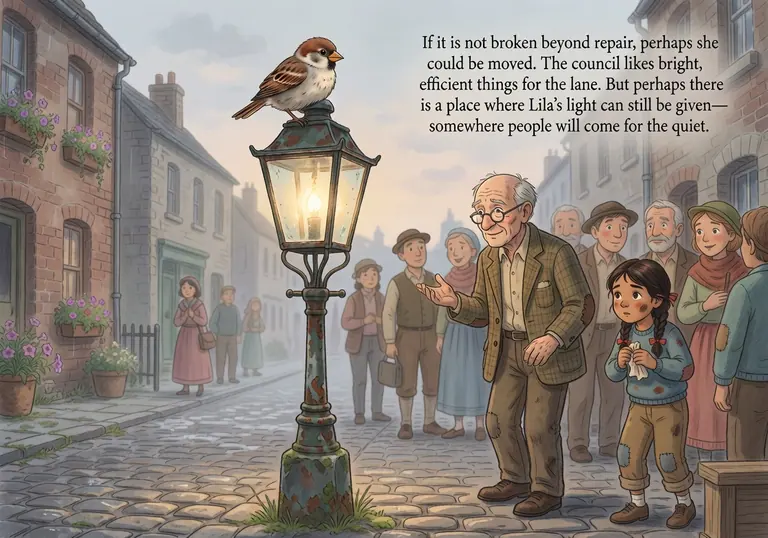
Illustration for Lila and the Sparrow's Light scene 3

There was a small silence, the kind that smells of rain before it falls. Then Mr. Rowan stepped forward. "If it is not broken beyond repair, perhaps she could be moved. The council likes bright, efficient things for the lane. But perhaps there is a place where Lila's light can still be given—somewhere people will come for the quiet."

Amina climbed down and wiped her hands on her trousers. She thought of how the lane's glow had touched her own childhood, how she had once paused beneath a lantern to tie her shoelace and caught her father's hand in the moment. She tightened her jaw in decision, then smiled.

They did not take Lila away to a warehouse. They did not throw her in a corner where light goes to sleep. Instead, the townspeople asked Mr. Rowan and Amina to help them restore her. They polished her brass, replaced her glass with panes that still held a little of her wavy history, and fitted her with a small electric bulb that warmed rather than glowed harshly. The new lamp posts went up along the lane, clean and bright. Lila stayed, set slightly lower where people could lean and whisper and where Pip could hop on without fear.

When the evening came, Lila shone. It was a slightly different light, a compromise between past and present. But the warmth was still there. People stopped by to look, to remember, to leave a ribbon or a little note. Mr. Rowan took up the habit of leaning on Lila's post during his walks, and Pip sang songs that made children laugh.

Months later, Mr. Rowan passed the responsibility of the lanterns to Amina, who tended them with a care that reminded everyone of the hands that had come before. Lila and Pip continued their evenings together, not because there were no new things to enjoy, but because they had discovered that friendship is a kind of light that takes many forms.

If you ever walk down a lane and find an old lantern with a small bird on its arm and a pile of tiny treasures tucked at its base, pause. Imagine how many quiet moments it has held. Friendship, like light, can be practical and tender at once. It shows up at the right time, keeps someone from stumbling, and reminds us that even when the world promises brighter bulbs, a familiar glow still has a place in the map of our hearts.

Pip hopped and the lane listened. Lila shivered her glass and kept her soft, steady watch. That is how they stayed—friend and light—for as long as the town needed them, and a little longer, too.

This story highlights (Tap any to explore similar stories)

Stories like this one
16Read count

Lila and the Sparrow's Light

Created 2026-04-06

An old street lantern named Lila and a little sparrow named Pip form a quiet friendship that helps their small town remember the value of small lights and small acts. When the town plans to replace Lila, the pair—and their neighbors—learn how friendship adapts and keeps its glow through change.
Illustration for Lila and the Sparrow's Light
There was a lane in the town of Willow Bend where maples arched overhead and the air always seemed to hold a hint of cinnamon from the bakery at the corner. At the heart of that lane stood an old lantern. People called her Lila. Lila had been mounted on the same iron post for longer than anyone could remember. Her glass was a little wavy from years of heat and rain, and her brass was speckled with tiny stars of rust. When evening fell, she threw a soft, warm circle of light onto the cobbles below. The light was not very bright, but it was steady and kind, like a friend who always notices when you’ve had a long day. One autumn evening, a sparrow with a small patch of mischief in his eyes landed on Lila's curved arm. His feathers were the color of toasted oats, and his name was Pip. Pip liked to visit the lane because Lila's light made it safe for him to peck for crumbs. But he stayed for the stories she told. Lila had watched deliveries arrive, weddings pass by in quiet flurries of laughter, late-night bakers carry boxes of warm buns, and old Mr. Rowan—who still lit the lanterns by hand—humming as he swung along the street. "Tell me about the wedding again," Pip chirped, fluffing his feathers. Lila hummed. "They danced in the rain, and everyone slipped on the cobbles with such good cheer that the town has not forgotten how to laugh at itself since." As the seasons turned, the two settled into a gentle routine. When the bakery's oven sighed, Lila would glow an extra fingertip of warmth; when Pip found a ribbon or a shiny button, he would tuck it into the notch at Lila's base like a little present. They listened to the soft music of the town: the oak leaves on the sidewalk, the distant hum of the river, the boots of late workers. Friendship, Lila learned, could be as simple as being there. One spring, a notice appeared on the lamppost across the lane. The town council had decided to modernize. It was a practical notice, printed on plain paper: old lanterns would be replaced with bright, automatic lights. The new ones promised to light the whole lane without the need for oil, without maintenance. They promised efficiency. Pip landed on Lila and peered at the notice with his small, earnest eyes. "So many new things are good things," he said. "They are brighter, cleaner, and they never leak oil." Lila's glass shivered a little. "I know. I have been useful, Pip. I have kept people from tripping on the cobbles and warmed late bakers' gloved hands. But a part of me worries—what if usefulness is all that matters now?" That night, Lila burned low. She had been trimmed and tended for years, but even with Mr. Rowan's careful hands, some of the old soot had settled into her corners. Pip stayed close and sang a loop of hopeful chirps while Lila thought of the many evenings she had been a quiet place for secrets and teacups to cool. She thought of how people paused beneath her glow, thinking, perhaps, of someone they loved. When Mr. Rowan came by the next morning, his steps slowed at the lamppost. He touched Lila's base with fingers that smelled faintly of oil and lavender. "They'll take you down, old friend," he murmured. "They'll say you're no longer needed." Pip fluttered to Mr. Rowan's shoulder. "Is there no space for old things that still care?" he asked. Mr. Rowan sighed, a gentle sound. "Change comes for all of us, little one. But sometimes, we can show people what they might lose." So Pip did what sparrows do best: he gathered. He brought ribbon thrown from stringed packages, a torn page with a child's doodle of the lane, and a dried daisy saved from the summer market. He placed each small treasure in the crook where Lila's base met the post. He also told the pigeons, and the cat who liked to nap on the bakery window sill, and the foxglove plants that nodded near the fence. The creatures of Willow Bend had no council to speak at meetings, but their actions had a language of their own. On the morning the new lights were to be installed, townsfolk gathered. Some were curious about the bright, efficient lamps; others remembered evenings lit by the old glow and felt a soft tug in their chests. Mr. Rowan stood with Lila's oil can at his side, and Pip perched on his hat like a feathered badge of honor. Children who came with their grandparents—no matter how many new lights the council promised—stood on tiptoe to see. The baker brought out a tray of small breads. A young woman placed a note at Lila's post, written in her careful script: "This light guided me home the night I ran away for the first time and came back to learn that home was here all along." Another neighbor left a tiny knitted heart. The electrician, a bright-eyed woman named Amina, climbed the ladder with a toolbox. She had the new lamp's fixtures in her bag, but as she reached for the bolt to remove Lila, she paused. She looked at the little treasures, at Mr. Rowan's hands, at Pip's earnest tilt of his head. "Do we have to take her down?" she asked softly. There was a small silence, the kind that smells of rain before it falls. Then Mr. Rowan stepped forward. "If it is not broken beyond repair, perhaps she could be moved. The council likes bright, efficient things for the lane. But perhaps there is a place where Lila's light can still be given—somewhere people will come for the quiet." Amina climbed down and wiped her hands on her trousers. She thought of how the lane's glow had touched her own childhood, how she had once paused beneath a lantern to tie her shoelace and caught her father's hand in the moment. She tightened her jaw in decision, then smiled. They did not take Lila away to a warehouse. They did not throw her in a corner where light goes to sleep. Instead, the townspeople asked Mr. Rowan and Amina to help them restore her. They polished her brass, replaced her glass with panes that still held a little of her wavy history, and fitted her with a small electric bulb that warmed rather than glowed harshly. The new lamp posts went up along the lane, clean and bright. Lila stayed, set slightly lower where people could lean and whisper and where Pip could hop on without fear. When the evening came, Lila shone. It was a slightly different light, a compromise between past and present. But the warmth was still there. People stopped by to look, to remember, to leave a ribbon or a little note. Mr. Rowan took up the habit of leaning on Lila's post during his walks, and Pip sang songs that made children laugh. Months later, Mr. Rowan passed the responsibility of the lanterns to Amina, who tended them with a care that reminded everyone of the hands that had come before. Lila and Pip continued their evenings together, not because there were no new things to enjoy, but because they had discovered that friendship is a kind of light that takes many forms. If you ever walk down a lane and find an old lantern with a small bird on its arm and a pile of tiny treasures tucked at its base, pause. Imagine how many quiet moments it has held. Friendship, like light, can be practical and tender at once. It shows up at the right time, keeps someone from stumbling, and reminds us that even when the world promises brighter bulbs, a familiar glow still has a place in the map of our hearts. Pip hopped and the lane listened. Lila shivered her glass and kept her soft, steady watch. That is how they stayed—friend and light—for as long as the town needed them, and a little longer, too.
Lila and the Sparrow's Light scene 1
One spring a notice appeared on
Lila and the Sparrow's Light scene 2
Mr Rowan sighed a gentle sound
Lila and the Sparrow's Light scene 3
There was a small silence the